
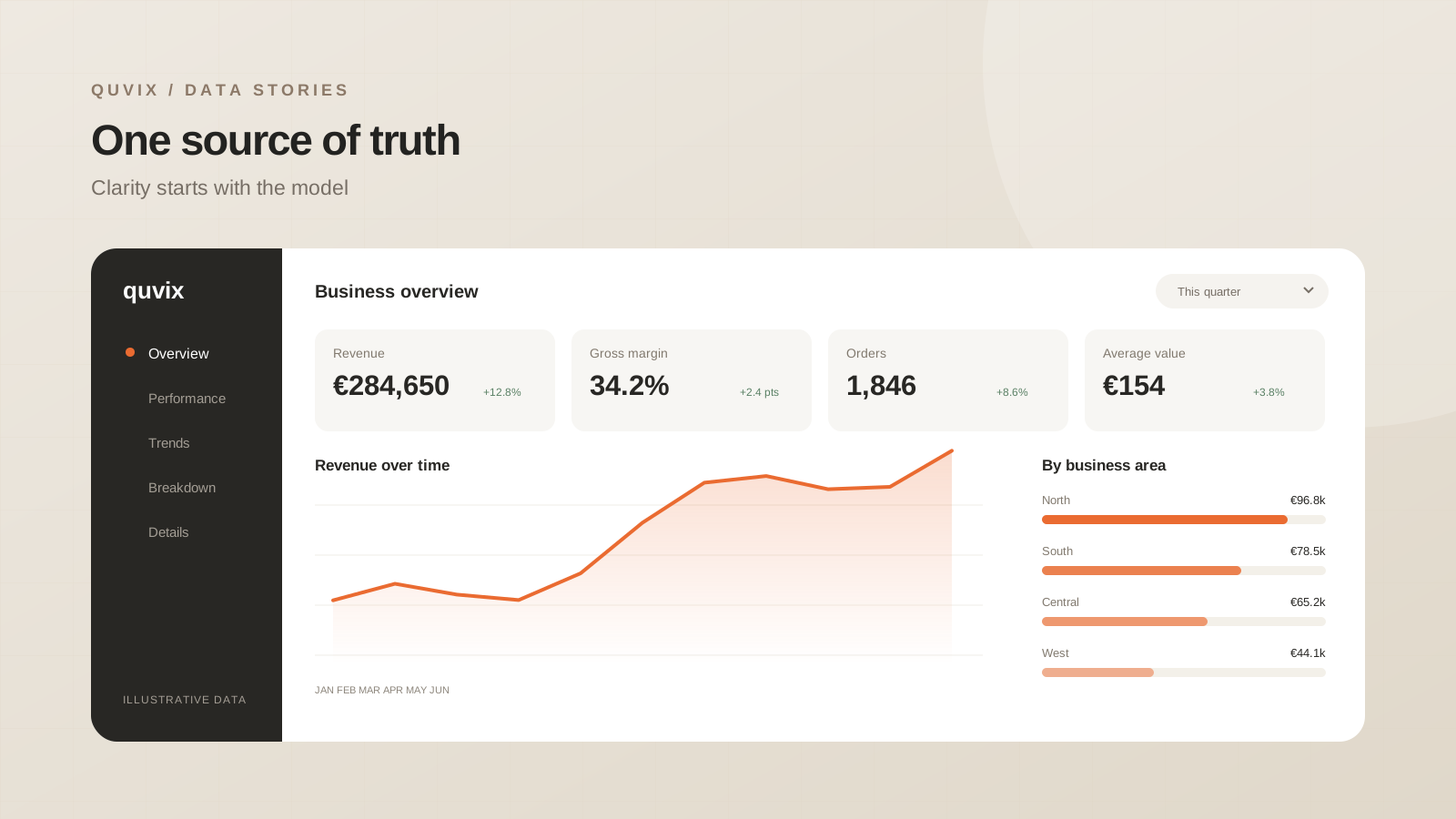
Give every metric a clear definition, so finance, sales, and operations can use the same numbers with shared confidence.
 ChatGPT
 Claude
 Google
 Grok
One label, several valid numbers
Ask three departments for revenue and you may receive three different totals. Sales might count accepted orders, finance might report invoiced amounts, and operations might track shipped goods. Each number can be useful. The problem starts when the report gives them the same label.
A shared definition makes the difference explicit. It states what is included, when the value is recognised, and which source supplies the record. It also identifies the person who can resolve an exception.
Write the definition down
A useful metric definition fits on a small reference card. It should be readable by someone who does not write SQL or maintain the reporting model.
- Name: invoiced net revenue.
- Event: an invoice is posted.
- Amount: invoice value excluding tax, less credit notes.
- Date: accounting posting date.
- Currency: reporting currency using the agreed rate table.
- Owner: the finance lead.
This is an illustrative definition, not a universal accounting rule. The correct choice depends on the business and the question being answered. The report should make that choice visible rather than burying it inside a formula.
Keep the model predictable
Separate the transactional facts from the attributes used to filter them. A clear relationship between a sales fact table, a date table, and customer and product dimensions gives measures a predictable context.
Avoid solving every discrepancy with another calculated column. First check the grain of the data. An order line, an invoice line, and a monthly account balance describe different things; joining them carelessly can multiply amounts.
Reconcile before publishing
Choose a closed period and compare the report against an agreed source. Reconcile the total first, then break it down by date, account, and transaction type. Record the differences and decide which are expected.
A small reconciliation table can be more persuasive than a long technical explanation. It shows the source total, the reporting total, and the reason for any gap.
Make ownership part of the product
Publish the definition beside the report and include it in the handover. When a source system or business rule changes, update the definition and check the affected measures together. Trust grows when people can trace a number and know who to ask about it.
Share this article: